What makes locksmith work in San Francisco different?
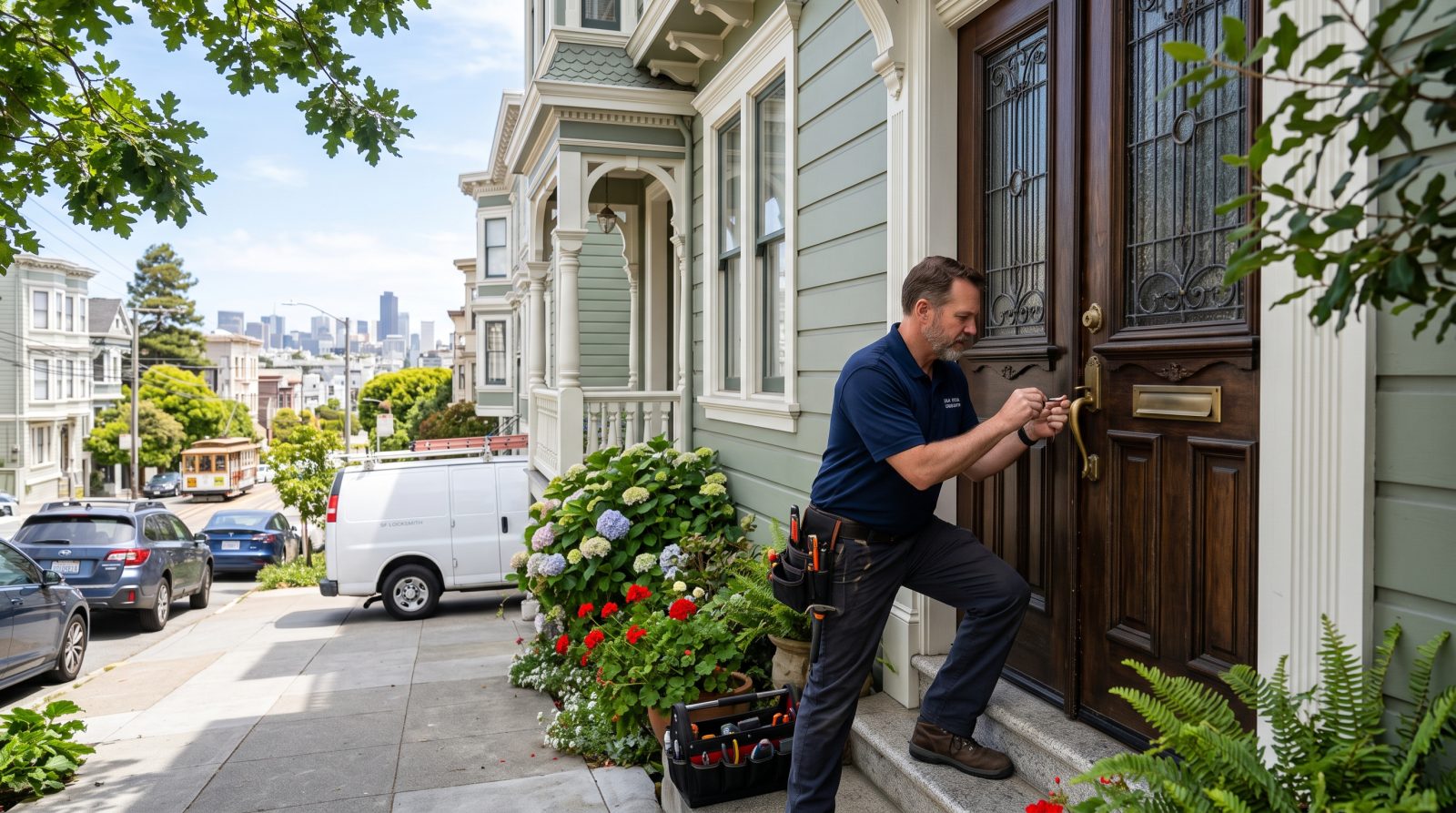
San Francisco is one of the most architecturally varied cities in the country, and that shows up in its locks. Whole districts - the Mission, the Castro, Noe Valley, the Haight, and the Western Addition - are filled with Victorian and Edwardian homes where you'll still find original mortise locks, skeleton-key hardware, and door frames that have shifted over a hundred-plus years of fog, foundation settling, and earthquakes. Servicing these often means more than swapping a cylinder; it can involve adjusting a sticky old door, fitting modern hardware into a non-standard mortise pocket, or rekeying to match an existing set.
At the same time, neighborhoods like SoMa, Mission Bay, Rincon Hill, and Dogpatch have filled with newer mid-rise and high-rise buildings that use electronic access, smart locks, fob entry, and multi-unit master-key systems. A locksmith working across San Francisco has to move comfortably between both worlds in the same day. The city's dense, hilly layout - and the parking realities of areas like North Beach, Chinatown, and the steep streets of Russian Hill and Telegraph Hill - also shape how mobile service is planned, since reaching a job in the Sunset or Excelsior is a very different trip than one downtown.
- Older housing stock: Victorian/Edwardian homes in the Mission, Castro, Noe Valley, Haight, Alamo Square area, and Western Addition
- Modern security: smart locks, fobs, and electronic access in SoMa, Mission Bay, Rincon Hill, and Dogpatch
- Multi-unit work: apartments, condos, and flats common across the city's three-to-six-unit buildings
- Mixed-use and commercial: storefronts and offices from the Financial District to Union Square and along the neighborhood corridors
Which San Francisco neighborhoods and areas are served?
Service covers San Francisco citywide, including the central and downtown areas as well as the residential districts that stretch out toward the ocean and the bay. Because the city is compact but divided by hills and distinct neighborhood identities, it helps to name your specific area and cross streets when you request a quote so the response can account for access and parking.
Commonly served areas include the Mission, Castro, Noe Valley, Bernal Heights, Glen Park, and Potrero Hill on the central-east side; the Richmond and Sunset districts and Golden Gate Heights out west; the Marina, Cow Hollow, Pacific Heights, and Presidio Heights to the north; North Beach, Chinatown, Russian Hill, Nob Hill, and Telegraph Hill near downtown; the Financial District, SoMa, Mission Bay, and Dogpatch in the city's commercial core; and the Excelsior, Ingleside, Visitacion Valley, Bayview, and Outer Mission to the south. As part of the wider San Francisco Bay Area, requests from nearby communities just over the city line can also be discussed when you reach out.
What locksmith services do San Francisco homes and businesses need most?
The most common requests in San Francisco fall into a few clear categories, and they tend to track the kind of property involved. Renters and homeowners in the city's many flats and apartments often need lockouts handled or locks rekeyed after a move, a roommate change, or a lost key. Owners of older single-family homes frequently ask about upgrading or repairing aging deadbolts and mortise locks, while residents of newer buildings ask about smart locks and electronic entry.
Businesses across the Financial District, Union Square, Hayes Valley, and the neighborhood commercial corridors typically need storefront and office lock service, rekeys when staff turns over, and master-key setups so different people can access different areas. Below are the services most often requested in the city.
- Home, apartment, and condo lockouts
- Rekeying after a move, sale, or roommate/tenant change
- Deadbolt repair, upgrade, and installation on older doors
- Smart lock and electronic deadbolt installation and setup
- Business and commercial lock service, including master-key systems
- Car lockouts and replacement or duplicate keys for many vehicles
How much does a locksmith cost in San Francisco?
Locksmith pricing in San Francisco depends on the job, the type of lock, the time of day, and how complex access is. The figures below are typical industry ranges offered as estimates only - your actual price is confirmed before any work begins, and the best way to get an accurate number for your situation is to request a free quote describing the lock, the door, and the address area.
As a general guide, a standard residential lockout in a metro area like San Francisco commonly falls in roughly the $75-$175 range, rekeying a lock often runs about $20-$50 per cylinder plus a service or trip charge, and installing a new deadbolt typically ranges from around $100-$250 depending on the hardware. Smart-lock installation, high-security hardware, and automotive keys with electronic programming generally cost more because of the parts and equipment involved. Older San Francisco doors that need adjustment or non-standard hardware can also affect the total. Treat all of these as ballpark estimates, not quotes - always confirm the price in advance.
- Residential lockout: typically about $75-$175 (estimate, varies by time and access)
- Rekey: typically about $20-$50 per cylinder plus a service/trip charge (estimate)
- Deadbolt installation: typically about $100-$250 depending on hardware (estimate)
- Smart locks, high-security hardware, and car keys: generally higher due to parts and programming (estimate)
How do you reach a San Francisco locksmith from this site?
Share what you're dealing with - for example, locked out of a flat in the Mission, needing a rekey in the Sunset after moving in, or wanting a deadbolt upgraded on an older Noe Valley door - along with your neighborhood and the type of lock if you know it. The more detail you provide up front, the faster and more accurate the response can be.
If it's an urgent lockout, say so clearly in your message and include the area and any access notes (a steep street, a gated entry, limited parking) so the response can plan accordingly. For non-urgent work like a planned lock upgrade or a business master-key setup, describing your goals lets you get a clearer estimate and a sense of next steps without any guesswork.