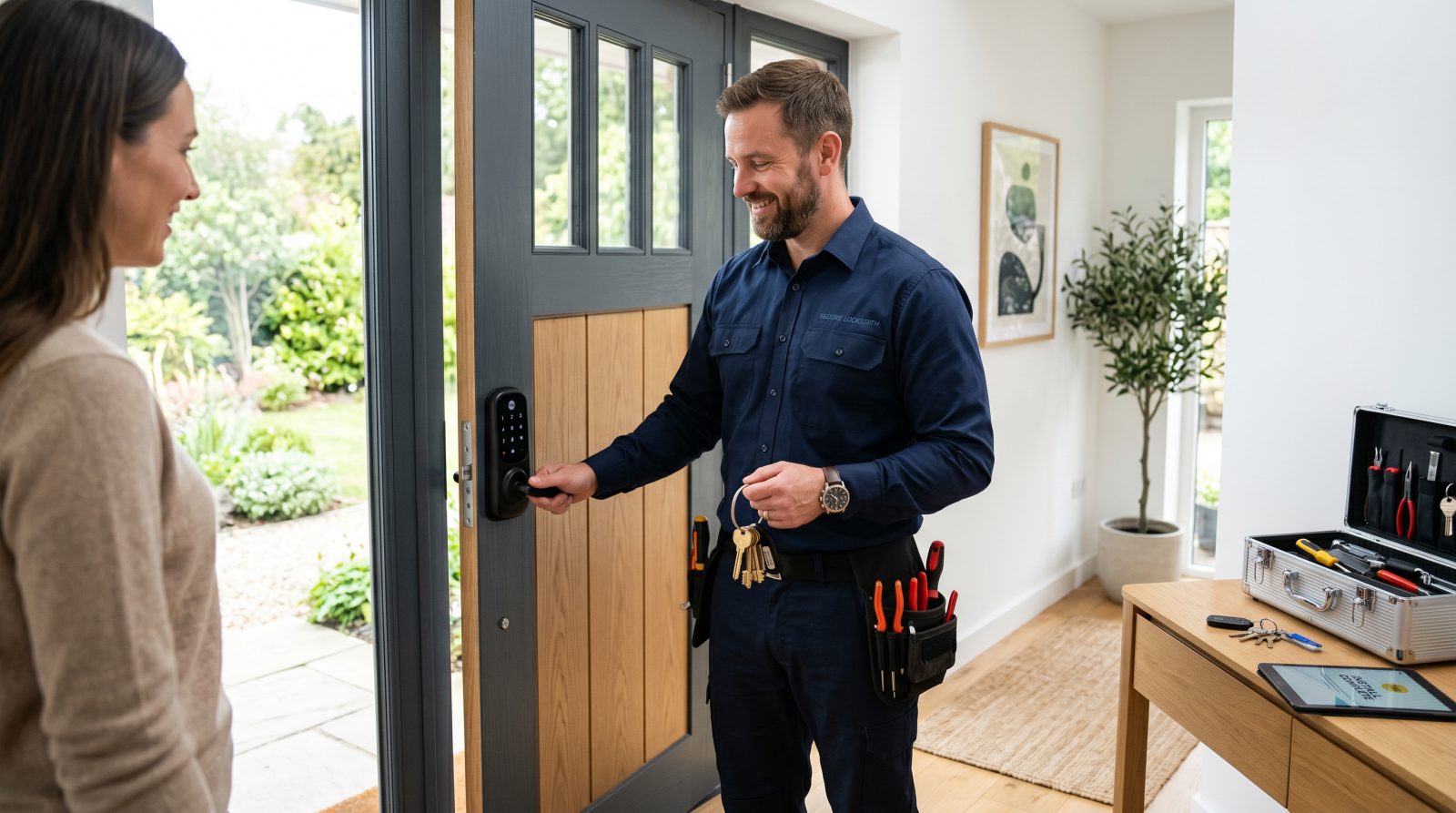
What is broken key extraction and when do you need it?
Broken key extraction means removing a portion of a key that has broken off inside a lock or ignition while leaving the working mechanism intact. It is a different job from a standard lockout: in a lockout the lock is empty and you simply can't get in, while with a broken key there is metal lodged inside the cylinder that has to come out before the lock can turn again.
You typically need extraction when a key snaps in the door as you turn it, when a worn or bent key crumbles inside the cylinder, or when a key shears off in a car ignition. Older brass keys, copies of copies, and keys forced in cold or sticky locks are the most likely to fail. The fragment usually breaks along the blade and stays wedged against the lock's internal pins or wafers.
The goal of a professional extraction is twofold: get every piece of the broken key out cleanly, and preserve the lock or ignition so it can be reused. When done correctly, you usually keep your existing hardware and walk away with a freshly cut working key rather than paying for a full replacement.
How does a locksmith remove a broken key from a lock?
A locksmith first inspects the cylinder to see how much of the blade is exposed and how the fragment is seated. The lock is usually turned back to the neutral position so the pins or wafers line up and release their grip on the broken piece, which makes removal easier and reduces the chance of damage.
From there, the technician uses purpose-made extraction tools sized for the keyway to catch the broken edge and draw it straight out along the path the key originally went in. A small amount of dry lubricant may be applied to free a stuck fragment. Pulling at an angle or with the wrong tool is what bends pins and ruins locks, which is why the right tools and technique matter.
Once the fragment is out, the locksmith tests the lock with a working key to confirm it still operates smoothly. If your only key was the one that broke, they can cut a new key on site for most common residential and commercial locks. For automotive ignitions, they verify the cylinder still turns freely and check that no internal piece was left behind.
- Inspect the cylinder and how the fragment is seated
- Return the lock to neutral so the pins release the piece
- Use keyway-specific extraction tools to pull the fragment straight out
- Test the mechanism and cut a replacement key when needed
Can a broken key in a car ignition be extracted?
Yes, a key broken off in a car ignition can usually be extracted, though it is more delicate than a door lock because the ignition cylinder is connected to the steering column and, on many vehicles, to an anti-theft transponder system. The locksmith removes the broken blade from the ignition without forcing the cylinder, then checks that the lock still rotates through its positions.
If your vehicle uses a transponder or chip key, the metal blade and the electronic chip are two separate things. Extracting the broken blade restores the physical lock, but you may also need a replacement transponder key that is cut and programmed to your car so the engine will start. A mobile automotive locksmith can often handle both the extraction and a new key at the same visit for many makes and models.
In some cases a severely damaged ignition cylinder needs repair or replacement, but extraction is almost always the first step and frequently the only one required. Getting the broken piece out promptly also helps prevent a fragment from being pushed deeper and causing more damage.
What does broken key extraction typically cost?
Pricing varies by the type of lock, how the key broke, and whether you also need a replacement key cut, so the figures below are typical industry estimate ranges rather than a quote for your specific job. The most reliable way to know your price is to request a free quote describing the lock and what happened.
Simpler residential extractions, where the fragment is partly exposed and the lock is standard, tend to sit at the lower end. Automotive ignition work, high-security cylinders, and jobs that also require cutting or programming a new key tend to be higher because they take more time and specialized equipment. After-hours service may also affect the rate.
It is worth comparing extraction to the alternative: replacing a lock or an ignition cylinder is almost always more expensive than removing a broken key and cutting a new one, which is why extraction is usually the cost-effective first choice when the hardware is otherwise in good shape.
- Standard residential door lock extraction: roughly $75 to $185 (estimate)
- Extraction plus a freshly cut replacement key: roughly $110 to $250 (estimate)
- Car ignition extraction: roughly $120 to $300+ (estimate), more if a chip key must be programmed
- High-security or commercial cylinders: typically higher; request a free quote for an estimate for your job
What should you do right after a key breaks in a lock?
The most important step is to stop and not make it worse. Resist the urge to jam the other half of the key back in to push the fragment out, force the lock, or dig at it with random tools, all of which tend to drive the piece deeper or bend the internal pins and turn a simple extraction into a lock replacement.
If a small part of the blade is sticking out and the lock is in the same position it was when the key broke, you can try gently gripping the exposed tip with needle-nose pliers and pulling straight out, without twisting. If the fragment is flush or recessed, leave it alone. Avoid super glue, which routinely makes things worse by bonding the fragment to the cylinder.
Keep both pieces of the broken key if you have them; the bow (the part you hold) helps a locksmith identify the key and cut an accurate replacement. Then request a free quote and describe the lock type and what happened so the right tools come on the first visit.
- Don't force the lock or push the fragment deeper
- Try a gentle, straight pliers pull only if the tip is clearly exposed
- Never use super glue to fish out a broken key
- Save both halves of the key for an accurate replacement
Why choose a local Bay Area locksmith for key extraction?
Broken key extraction is mobile work: the locksmith comes to your home, business, or vehicle with the extraction tools and key-cutting equipment needed to finish the job on the spot. A local Bay Area technician can reach you across the region's mix of dense city blocks, hillside neighborhoods, and suburban communities without you having to remove the lock and carry it somewhere.
Working with a nearby locksmith also means familiarity with the range of hardware common across the Bay Area, from older entry locks in established homes to modern deadbolts and ignition systems in newer vehicles. The right technique protects your existing lock and helps you avoid the larger cost of replacement.
Describe the lock or ignition, how the key broke, and your location, and you'll get the information you need to move forward.