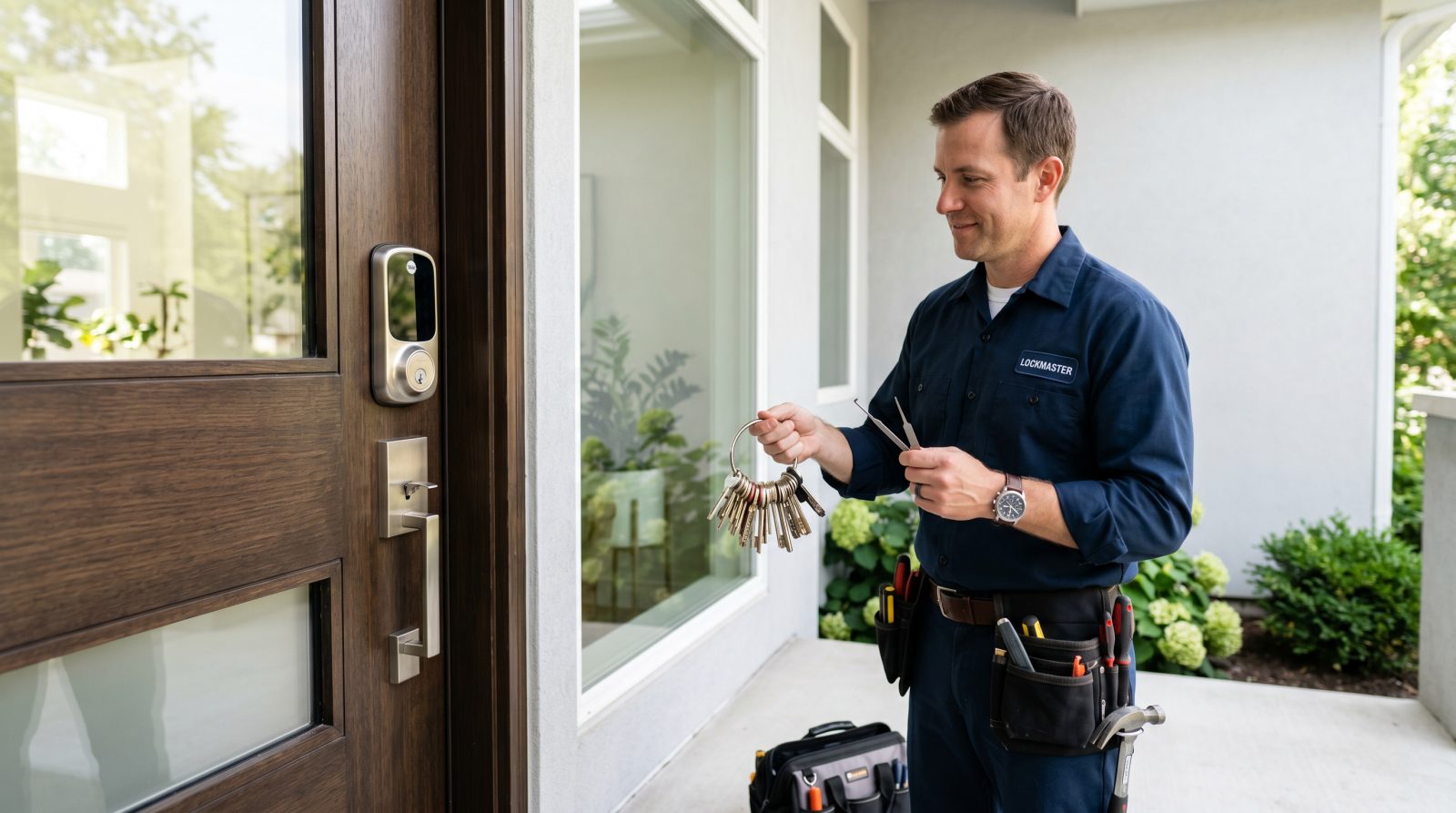
Who is responsible for the locks in a rental?
In a typical rental, the door hardware is part of the property, so the landlord or property manager generally controls whether locks get rekeyed or replaced. That means a renter usually should not swap, drill, or permanently alter a unit's locks without written permission, because doing so can affect your security deposit and may conflict with your lease. The flip side is that landlords are commonly expected to provide working, secure locks on entry doors as part of keeping a unit habitable.
Leases vary, so the practical move is to read your rental agreement's section on locks, keys, and alterations before you do anything. Some agreements spell out who pays for a rekey at move-in, whether you can add a smart lock, and how keys must be returned at move-out. When the lease is silent or unclear, the safest path is to ask in writing and keep a copy of the answer.
This is general guidance, not legal advice. Tenant and landlord rights in California and in individual Bay Area cities can be specific, so for a dispute about responsibility or cost, check your city's tenant resources or a qualified professional rather than relying on a web page.
- Locks are usually the property's, so changes typically need landlord approval.
- Landlords commonly provide working, secure locks on entry doors.
- Read your lease's locks/keys/alterations clauses before acting.
- Get permission in writing and keep a copy.
Should I ask for a rekey when I move in?
Asking your landlord to rekey the locks before or right after you move in is a reasonable request many renters make, because you usually can't know how many copies of the old keys are still out there with past tenants, cleaners, or contractors. A rekey changes the internal pins of the existing lock so old keys no longer work and you get a fresh set, all without replacing the lock hardware itself.
Because a rekey reuses the existing locks, it is often a lower-cost option than buying and installing brand-new locks, which is one reason it is a common move-in step. Exact pricing depends on the number of doors, the lock types, and local rates, so treat any figure you see online as a typical industry estimate rather than a quote. Confirm with your landlord whether they will arrange the rekey, whether it is already part of their turnover process, and who covers the cost.
If your landlord arranges the work, they typically coordinate the locksmith and keep a key as needed for legal access. If they ask you to handle it, get that request in writing first so there is no question later about permission or who pays.
- A rekey makes old keys stop working without replacing the lock.
- It is a common, often lower-cost move-in request.
- Ask who arranges and pays for it, in writing.
- Any price online is a typical estimate, not a quote.
What's the difference between a rekey and a lock replacement?
A rekey keeps your existing lock and changes its internal pins so it works with a new key while old keys stop working. A replacement removes the old lock entirely and installs new hardware. For most move-in security concerns, a rekey solves the core problem, that unknown people may still hold a working key, without the cost of new hardware.
Replacement makes more sense when the lock itself is the problem: it is worn out, damaged, sticking, or no longer reliable, or when you and your landlord want to upgrade the hardware. Because replacement changes the physical hardware on the property, it almost always needs landlord sign-off in a rental, and the chosen hardware may need to match building standards or a master-key system the property uses.
If you are weighing the two, describe the actual goal to your landlord and the locksmith: 'I want old keys to stop working' usually points to a rekey, while 'this lock is broken or I want a different lock' points to replacement. Costs for both are best confirmed at the time of service, and online figures should be read as typical industry ranges.
- Rekey: same lock, new key, old keys disabled.
- Replacement: new hardware installed in place of the old lock.
- Replacement usually needs landlord approval and may need to match building standards.
- Match the choice to the goal: stop old keys vs. fix or upgrade the lock.
What should I do if I'm locked out of my rental?
If you are locked out, start with the calm, no-cost options before anything else. Check for a spare you left with a trusted person, see whether a roommate or household member can let you in, and contact your landlord or property manager, since some keep a spare or have an on-call maintenance contact for exactly this situation. Knowing your landlord's after-hours process before you ever need it saves a lot of stress.
If those options don't work, a professional locksmith can help you regain entry to your own home. Because you are a renter rather than the owner, a reputable locksmith will typically ask you to verify that you live there, for example with an ID showing the address or other proof of residence, so have something ready. This protects you and everyone else in the building.
Avoid forcing a door or window or trying makeshift entry tricks, which can damage property you may be responsible for and can make a simple lockout far more expensive. When you reach out for a quote, describe the door and lock type so you get useful guidance, and remember that any prices mentioned online are typical estimates, not a firm quote for your specific situation.
- Try a spare, a roommate, or your landlord's after-hours contact first.
- Be ready to prove you live there when a locksmith arrives.
- Don't force doors or windows; damage can become your cost.
- Ask for a quote and describe your door and lock type.
Can I add a smart lock or extra deadbolt as a renter?
Many renters want a smart lock, a keypad, or an added deadbolt for convenience and peace of mind, and that can be possible, but in a rental it generally starts with landlord permission. Adding or swapping hardware is an alteration to the property, so getting a yes in writing protects your deposit and avoids a dispute at move-out.
A common, low-friction approach is a device that installs over or alongside the existing deadbolt without permanently modifying the door, which can sometimes be removed cleanly when you leave. Even with that kind of product, confirm with your landlord first, ask whether they want a key or access maintained for legal entry, and clarify whether you must restore the original hardware before you move out.
If you do get approval, keep the original lock hardware in a safe place so it can be reinstalled, and document the door's condition before and after with photos. As with any lock change in a rental, get the agreement in writing rather than relying on a verbal okay.
- Smart locks and extra deadbolts usually need written landlord approval.
- Non-permanent, removable options are often easier to get approved.
- Ask whether the landlord needs ongoing key or access.
- Keep original hardware and photo-document before and after.
What lock basics should every Bay Area renter confirm?
Before or just after you sign, walk the unit and check that every entry door's lock and deadbolt actually works, that windows latch, and that you have a full set of keys for each lock. Test them yourself rather than assuming, since a sticking deadbolt or a key that needs jiggling is easier to address at move-in than months later. Note anything that doesn't work on your move-in condition checklist.
Confirm the move-in and move-out lock expectations in writing: whether the unit will be rekeyed for you, who pays, how many keys you'll receive, and how keys must be returned at the end of the lease. Returning all keys at move-out is commonly tied to getting your deposit back smoothly, so don't make extra copies you'll forget to return. Also ask how to report a broken or unsafe lock and what the expected response process is.
Keep your own simple record: photos of each lock at move-in, the date of any rekey or repair, and copies of written approvals from your landlord. If a question about responsibility, cost, or your rights comes up, your city's tenant resources are a better source than general web content. This guide is informational only and not legal advice.
- Test every entry lock, deadbolt, and window latch at move-in.
- Confirm rekey, key count, and key-return rules in writing.
- Learn how to report a broken or unsafe lock.
- Keep dated photos and copies of all written approvals.