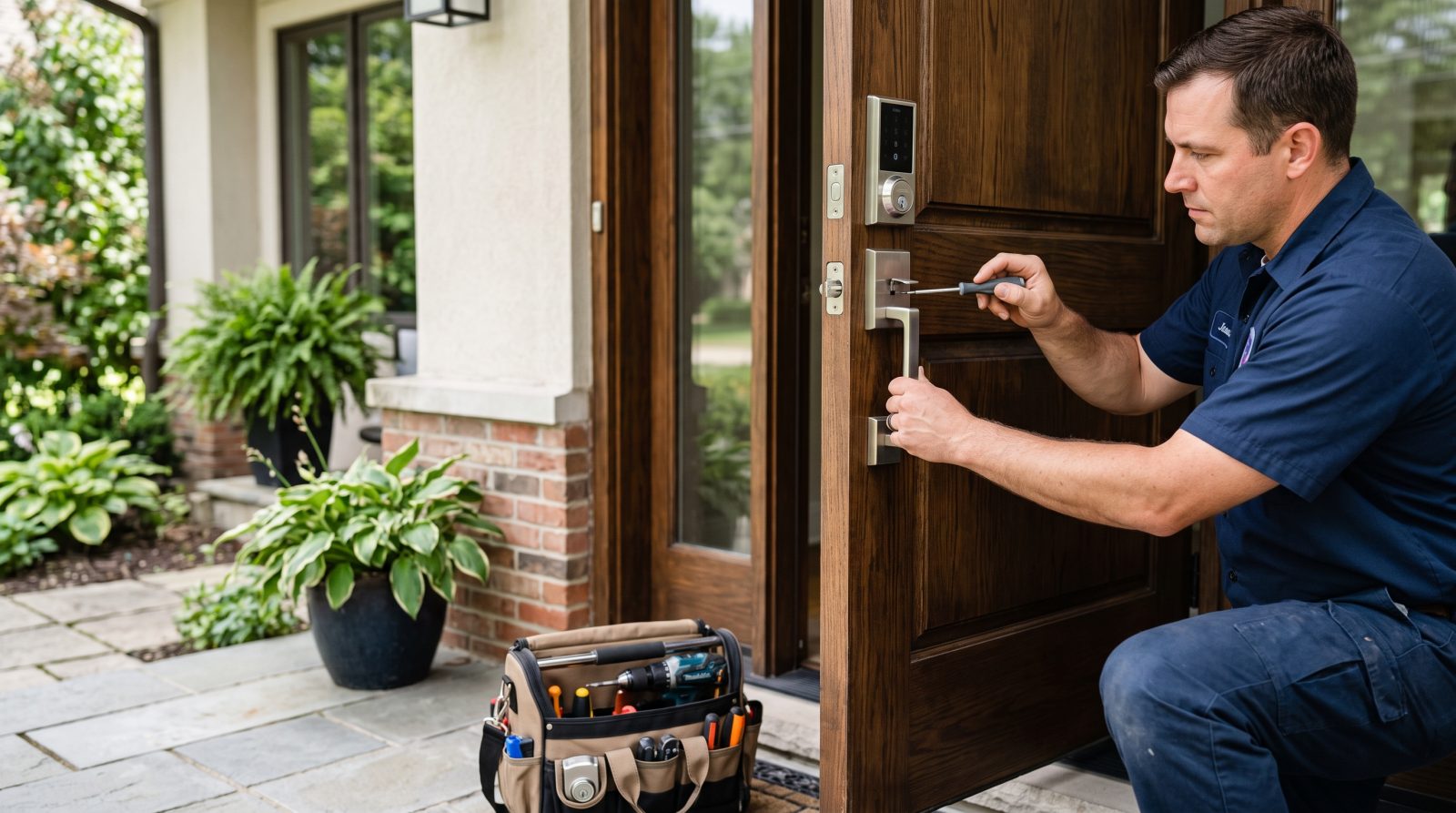
What is a lock change, and how is it different from a rekey?
A lock change is the full removal of your old lock hardware and the installation of a new lock that comes with its own new keys. Because the entire lock cylinder and often the whole lockset is swapped out, any key that worked before no longer works, and you start fresh with the keys the new lock ships with.
A rekey, by contrast, keeps your existing lock body in place. A locksmith services the cylinder so it accepts a different key than it did before. The hardware stays; only the key that operates it changes. This is a common, low-cost way to invalidate old keys without buying new hardware.
The practical difference comes down to the hardware. Choose a lock change when the lock itself is the problem: worn, damaged, outdated, or when you want a different style or a higher grade. Choose a rekey when the lock works fine but you need old keys to stop working, such as after a move or when you have lost track of who holds a copy. A local locksmith can look at your door and recommend which path fits your situation.
When should you change or install a new lock?
Several common situations make changing an existing lock or installing a brand-new one worthwhile. The goal is always the same: controlling who can open your door and making sure the hardware is reliable.
- You moved into a new home or rental and do not know how many keys are still out there from previous occupants, contractors, or agents.
- A lock is physically worn or failing: the key sticks, the cylinder turns roughly, the bolt does not throw smoothly, or the latch no longer seats.
- A break-in or attempted entry damaged the lock or door hardware and you want fresh, intact components.
- You want to upgrade to a higher-grade deadbolt or add a deadbolt to a door that only has a knob or lever lock.
- You want keyed-alike convenience (one key for several doors) or a smart lock with keypad or app entry.
- A door previously had no lock at all (a new interior door, a side or gate door, a converted space, or new construction) and needs hardware installed from scratch.
Types of locks we change and install
Locksmiths in the Locksmith Near Me network work with the full range of residential and commercial lock hardware. The right choice depends on the door, how it is used, and the level of security you want.
Lock grades are commonly described using the ANSI/BHMA rating system, where Grade 1 is the most heavy-duty (often specified for commercial use), Grade 2 is a strong residential choice, and Grade 3 meets basic residential standards. A locksmith can explain what grade your current hardware is and what an upgrade would involve.
- Deadbolts: single-cylinder (thumbturn inside, key outside) and double-cylinder (key on both sides), a common security upgrade for exterior doors.
- Knob and lever locks: the everyday handle-mounted locks on interior and many exterior doors; levers are often chosen for easier operation.
- Mortise locks: a robust lockset that fits into a pocket cut into the door edge, common on older homes and many commercial entrances.
- Smart locks and keypad locks: electronic entry by code, app, or fob, often supporting standards like Z-Wave, Zigbee, Wi-Fi, or Bluetooth, and frequently still keyed as a backup.
- High-security and commercial hardware: heavier cylinders and lock bodies, panic and exit devices, and keyed-alike systems for businesses with multiple doors.
What to expect during a lock change or installation
A lock change or new installation is a methodical job for a trained locksmith. Knowing the steps ahead of time makes it easier to plan and to ask the right questions when you request your quote.
First, the locksmith assesses the door and the existing hardware (if any), checking the door thickness, the backset (the distance from the door edge to the center of the bore hole), and the existing bore and latch holes. This determines which lock will fit cleanly without extra modification.
Next comes removal and fit. For a lock change, the old hardware is removed; for a new installation on a door without an existing lock, the locksmith may need to bore the door and mortise the edge for the latch and strike plate. The new lock is then mounted, the strike plate is fitted to the frame, and everything is aligned so the bolt or latch seats properly.
Finally, the locksmith tests the lock through several full cycles, confirms the key turns smoothly and the bolt throws fully into the frame, checks that the door closes and latches correctly, and hands over the new keys. For smart locks, this includes programming codes or pairing the device and confirming the mechanical backup works.
How much does a lock change or new lock installation cost?
Costs vary by region, hardware, and the complexity of the job, so the figures below are typical industry ranges meant as estimates only, not quotes. The hardware itself is usually the biggest variable: a basic deadbolt costs far less than a high-grade commercial lock or a connected smart lock.
As a general guide, a standard residential deadbolt or knob lock change commonly falls in the rough range of about 100 to 250 dollars including labor and a mid-range lock, while smart locks and high-security or commercial hardware typically run higher because the devices themselves cost more. Installing a lock on a door that has never had one (which may require boring and mortising) can add labor compared with a straight swap of identical hardware.
Factors that move the price include the lock grade and brand, the number of doors, whether you want them keyed alike, the condition of the door and frame, and any prep work the door needs. Your exact price depends on your specific door and hardware, which is why a free quote based on your situation is the only way to get a real number.
Why request a free quote through Locksmith Near Me
Locksmith Near Me is a national brand that helps people across the United States connect with local locksmith help for lock changes and new lock installations. Instead of guessing at hardware or price on your own, you describe your door and what you want, and you get a quote tailored to the job.
Because every door and lock situation is a little different, starting with a free quote lets a locksmith confirm the right hardware, the correct fit, and the work involved before anything is purchased or installed. There is no obligation: you share the details, you get an estimate, and you decide how to proceed. When you are ready, request your free quote and a local locksmith can take it from there.