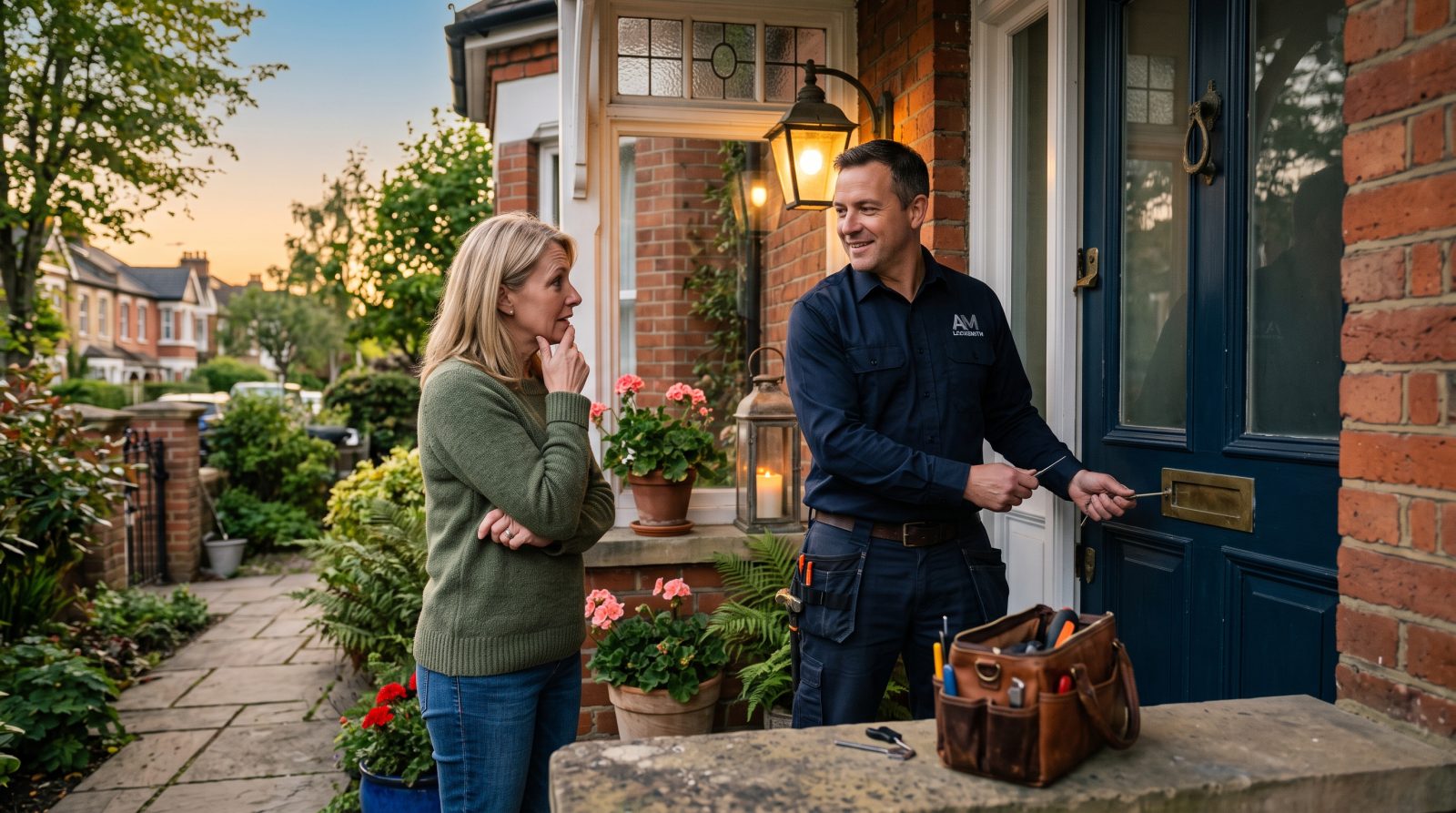
What counts as a locksmith emergency?
A locksmith emergency is any lock or key problem that leaves you unable to safely enter, secure, or use a property or vehicle and that cannot reasonably wait. The defining feature is urgency: you are locked out, locked in, or your home, business, or car is no longer properly secured.
Not every lock issue is an emergency. A spare key you want cut, a planned lock upgrade, or a sticky deadbolt you can still operate are usually standard appointments. Knowing the difference helps you describe your situation accurately when you request help, so the locksmith arrives prepared for what you actually need.
- House or apartment lockout (key lost, locked inside, or door latched shut)
- Car lockout, including keys locked in the vehicle or a lost car key
- Broken key snapped off inside a lock or ignition
- A lock that has jammed, seized, or failed and will not turn
- Security concern after a lost or stolen key, break-in, or tenant turnover where the locks should be changed
- A safe, mailbox, or interior door that has locked and cannot be opened with the available key
What happens on an emergency locksmith call?
An emergency call generally begins with a few questions so the locksmith understands the problem before arriving. Expect to share the type of property or vehicle, the kind of lock involved, what went wrong, and your location. For lockouts, you may also be asked to show that you have the right to enter, since a reputable locksmith confirms authorization before opening a door.
On site, the locksmith assesses the lock and chooses the least damaging approach that solves the problem. Many residential and automotive lockouts can be opened using non-destructive entry methods, which work the existing lock rather than breaking it. If a lock is already damaged or beyond repair, the locksmith will explain the options before doing any work that changes the hardware.
Once you are back in, the work may be finished, or there may be a follow-up step, such as extracting a broken key, rekeying a cylinder, or replacing a failed lock. A clear walkthrough of what was done and what, if anything, still needs attention is part of a professional visit.
Common emergency situations and how they are handled
Most urgent calls fall into a handful of recognizable situations. Understanding the typical fix for each helps you set expectations and ask better questions when help arrives.
- Lockout: the locksmith uses non-destructive entry where possible to open the door without damaging the lock, then verifies the lock still works correctly afterward.
- Broken key in a lock: the broken piece is extracted with specialized tools so the cylinder can be used again; a replacement key is then cut or the cylinder is rekeyed.
- Lost keys: because a lost key is a security risk, the common response is to rekey the affected locks so old keys no longer work, rather than simply cutting a duplicate.
- Jammed or failed lock: the locksmith diagnoses whether the cylinder, latch, or mechanism is at fault and repairs or replaces the failing part.
- Lock change after a move or incident: existing cylinders are rekeyed or hardware is swapped so only your new keys operate the locks.
Rekey vs. replace: which does an emergency need?
Rekeying and replacing are two different answers to a security problem, and emergency calls often involve choosing between them. Rekeying changes the internal pins of an existing lock so that old keys stop working and a new key is required, while keeping the same lock hardware on the door. It is typically the faster, lower-cost option when the lock itself is in good condition.
Replacing the lock means installing new hardware entirely. This is the right choice when a lock is damaged, worn out, outdated, or when you want a different type of lock or a higher grade of security. After a lost key, many people rekey because the hardware is fine and only the key access needs to change; after a break-in or a failed lock, replacement is often more appropriate.
A good locksmith explains which approach fits your specific situation and why, rather than defaulting to the most expensive option. If you are unsure, ask them to walk you through the trade-offs in plain terms before any work begins.
What does an emergency locksmith cost?
Pricing depends on the job, the type of lock or vehicle, your location, and the time of day. The figures below are typical industry estimate ranges to help you plan; they are not quotes. For an accurate price for your situation, request a free quote and describe exactly what you need.
Several factors move the price within these ranges. After-hours or weekend calls often cost more than daytime visits. High-security locks, newer vehicles with transponder or smart keys, and jobs that require new hardware tend to sit at the higher end, while a straightforward lockout or a single rekey sits lower. Always confirm the expected cost before work starts so there are no surprises.
- Home or car lockout (non-destructive entry): often around $75 to $200 as a typical estimate, varying by time and complexity
- Rekeying a lock: commonly about $15 to $50 per cylinder for the rekey, plus a service or trip charge
- Broken key extraction: frequently in the $75 to $150 range depending on lock type and severity
- Standard deadbolt or lock replacement: typically around $100 to $300 including basic hardware, with high-security options costing more
- Car key replacement: ranges widely from basic mechanical keys to transponder and smart keys; modern keys that require programming generally cost the most
How to choose a trustworthy emergency locksmith
Urgency makes it easy to skip the basics, but a few quick checks protect you. A trustworthy locksmith identifies their business clearly, confirms you have the right to enter before opening a door, and gives you an upfront estimate rather than a vague promise to be sorted out later.
Be cautious of anyone who refuses to provide a clear price range before arriving, who pushes to drill a lock as the first resort when non-destructive entry is usually possible, or who quotes a very low number and then raises it dramatically on site. Asking a few questions before the visit is the simplest way to avoid these problems.
- Ask for an upfront estimate and what could change the final price
- Confirm they will attempt non-destructive entry before any drilling or hardware damage
- Expect to verify your right to access the property or vehicle
- Get the scope in writing or stated clearly: what will be opened, repaired, rekeyed, or replaced
- Make sure you understand any after-hours or trip charges before work begins